
Restricted Chips Reach Sanctioned Institutions
Northwestern Polytechnical University bought two Nvidia H200 artificial intelligence chips for 874,700 yuan, which equals about $123,000, on October 21 through a local supplier named Shaanxi Bosuan Network Technology. The purchase took place even though the institution has remained on the trade blacklist of the United States Commerce Department since 2001. Artificial intelligence chips are advanced semiconductor components designed to perform complex mathematical calculations rapidly, allowing computer systems to learn from massive datasets. The findings indicate that sanctions designed to block the flow of sensitive hardware face persistent enforcement challenges across complex global supply chains.
สารบัญ
The university belongs to China's elite group of defence-focused academic institutions known as the Seven Sons of National Defense. Based in the northwestern city of Xi'an, the school conducts research related to military aircraft, missiles and satellites. The H200 processor is among Nvidia's most capable hardware for training artificial intelligence models, a process where computer algorithms analyze huge volumes of data to recognize patterns and make decisions. Exports of such hardware require approval from Washington, with licenses normally denied for blacklisted organizations. Procurement records show the transaction used a domestic Chinese supplier rather than a direct purchase from the manufacturer, bypassing typical export review checkpoints.
Additional records reveal that physical purchases represent only one channel for acquiring advanced computing power. The cybersecurity school at Northwestern Polytechnical awarded two seven-month contracts in January for access to remote servers containing eight H200 chips each, valued at 441,700 yuan and 441,000 yuan. These rental agreements allowed the school to perform fine-tuning, which adapts an existing artificial intelligence model for specialized tasks, and reinforcement learning, which trains a system using feedback and rewards. The institution also rented access to servers containing older Nvidia A100 and A800 processors, demonstrating how renting computing capacity allows organizations to utilize restricted hardware without owning the physical equipment.
Broader Procurement Patterns Across China
A review of Chinese procurement and corporate records reveals that multiple universities and research entities have acquired restricted hardware or computing services. Wuhan University of Technology bought a server containing an H100 chip for 355,000 yuan in June alongside four A100 chips for 344,000 yuan. Shenzhen University acquired three H100 processors for 769,800 yuan. Government procurement announcements in July and September named suppliers providing computing services using restricted H800 and A800 chips to the University of Chinese Academy of Sciences. Harbin Institute of Technology bought a Super Micro system in July 2025 containing eight Nvidia A100 graphical processing units, while Beihang University acquired a machine-learning workstation configured with four A100 chips in March 2026. These transactions highlight how domestic suppliers and rental arrangements provide alternative pathways to hardware restricted by American trade policy.
Investigative findings published by media organizations show that approximately 80 percent of the buyers identified in a review of nearly 300 procurement records were universities, with research institutes and government bodies accounting for the remainder. Experts note that once restricted semiconductors enter China, regulatory oversight struggles to prevent their redistribution through complex supplier networks, shell companies, and falsified documentation. Smuggling operations frequently transfer shipments through intermediaries in Southeast Asia, where serial numbers on hardware are moved to dummy servers before final delivery. Similar challenges emerged after earlier restrictions, recalling the university's management school purchase that first exposed how domestic suppliers bridge the gap between restricted entities and prohibited hardware.
Washington Licensing Disclosures and Congressional Scrutiny
American lawmakers intensified their oversight after the United States House Foreign Affairs Committee released internal export licensing data. Committee Chairman Brian J. Mast utilized powers under the Export Control Reform Act to disclose that the Department of Commerce approved nearly 879,000 advanced artificial intelligence chips for export to China between December 2025 and May 2026. The disclosures showed that Chinese technology giants including Alibaba, Tencent, Baidu, and BYD received allocations for restricted processors. Several of these corporations have faced temporary designations on American military-linked business lists, raising questions regarding the stringency of national security reviews conducted by the Bureau of Industry and Security.
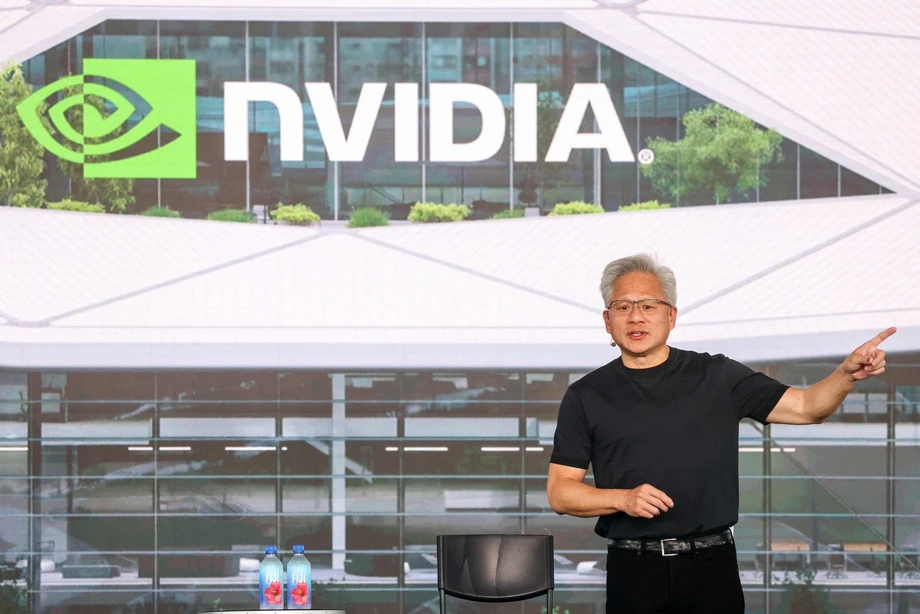
Political friction surrounding these approvals escalated alongside corporate leadership changes at Nvidia. Former chief executive Jensen Huang stepped down following controversies involving reported contacts with a foreign intelligence operation, prompting three Republican congressional committee chairmen to request a closed-door briefing. Huang and Nvidia legal counsel Tim Teter agreed to testify before congressional committees in early December. Meanwhile, Colette Kress, serving as interim chief executive, confirmed during a financial results conference call that the company had suspended all shipments of H200 chips to China despite prior regulatory approvals. The Department of Commerce reported receiving applications for 3.4 million chips during the six-month window, reflecting immense demand from Chinese entities seeking high-performance hardware.
Enforcement Measures and Legal Inquiries
State and federal authorities expanded their investigations into the movement of sensitive technology and corporate compliance. California Attorney General Rob Bonta announced an investigative subpoena issued to Nvidia to determine whether the company or its executives permitted unauthorized access to advanced semiconductors or confidential information. The inquiry examines whether corporate disclosures adequately informed investors about export compliance risks. Simultaneously, the United States Senate received a formal communication from Senators Jim Banks and Elizabeth Warren urging the Department of Commerce to suspend export licenses issued to intermediaries operating within Chinese supply chains.
Regulatory frameworks also target remote access channels that bypass physical import controls. The Bureau of Industry and Security implemented rules requiring performance testing for certain processors at designated laboratories within the United States prior to export, alongside mandatory compliance verifications. Additional guidelines published in November expanded regulatory reach to encompass remote access to cloud computing facilities located in third countries. These measures attempt to close loopholes where users execute demanding artificial intelligence workloads across international networks without importing the physical silicon.
Timeline of Key Developments
- 2001: The United States Commerce Department adds Northwestern Polytechnical University to its trade blacklist over missile research concerns.
- January 2026: Northwestern Polytechnical University awards two rental contracts for servers containing sixteen H200 chips.
- July 2025 to March 2026: Harbin Institute of Technology and Beihang University acquire servers containing Nvidia A100 processors from Super Micro Computer.
- November 18, 2026: Congressional committee chairmen request a briefing with Nvidia leadership regarding export channels and security controls.
- November 19, 2026: The House Foreign Affairs Committee publicly discloses internal licensing data showing nearly 879,000 advanced chip approvals.
- November 19, 2026: California Attorney General Rob Bonta announces an investigative subpoena directed at Nvidia.
The Essentials
- Northwestern Polytechnical University purchased two Nvidia H200 chips for 874,700 yuan through a local supplier on October 21.
- The House Foreign Affairs Committee revealed that the United States approved nearly 879,000 advanced AI chips for export to China between December 2025 and May 2026.
- California Attorney General Rob Bonta issued an investigative subpoena to Nvidia regarding potential unauthorized access to advanced technology.
- Nvidia interim leadership confirmed that the company suspended all shipments of H200 processors to Chinese buyers.
- Investigators identified multiple blacklisted Chinese universities acquiring restricted hardware through domestic suppliers and server rental contracts.