
Introduction of the Government Artificial Intelligence Platform
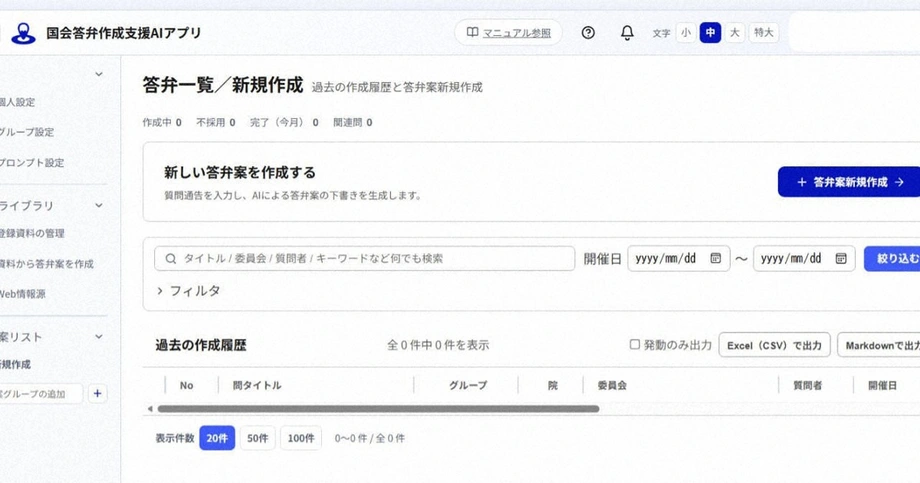
The Japanese Digital Agency launched a prototype artificial intelligence app on Oct. 30 to help government workers draft responses for ministers to deliver in parliament. Overtime among Japanese bureaucrats has historically reached extreme hours, particularly during preparations for parliamentary sessions, because lawmakers often submit questions late and researchers must craft accurate responses. The Digital Agency added this tool to an in-house generative artificial intelligence platform known as Genai, which aims to assist national public servants in their daily duties. Around 180,000 government employees gained access to the platform, which is designed to optimize the process of searching through previous parliamentary statements and reference materials to draft answers within minutes.
สารบัญ
Preparing for Diet sessions traditionally requires officials to review submitted questions, confirm the intent and background with lawmakers, and construct detailed answers. The new tool analyzes questions, summarizes main points, and accesses extensive reference materials including Diet minutes and legislation. It also suggests potential follow-up questions that lawmakers might ask. Officials remain responsible for cross-checking all drafts against source materials to verify accuracy and consistency with government policy, ensuring that humans retain final control over every word.
Working Long Hours to Answer Parliamentary Questions
Government employees spend grueling hours researching and drafting parliamentary replies, a burden highlighted by a survey conducted in February and March of last year by the Cabinet Bureau of Personnel Affairs. During that period, when budget committees for both houses of parliament held sessions, ministry and agency officials took an average of seven hours and 16 minutes just to draw up responses to submitted questions, finishing their work at an average time of 1:48 a.m. Toshiharu Furukawa, the minister for digital transformation, spoke to reporters on Oct. 30 to address these demands. He noted that preparing accurate answers to parliamentary questions in a limited timeframe is particularly demanding, and the new tool can significantly reduce the time needed.
To accelerate these efficiency gains, the Digital Agency held a workshop on Nov. 17 for government staff. Thirty-four officials from institutions such as the Cabinet Office, the Ministry of Internal Affairs and Communications, and the Ministry of Justice participated alongside technical advisers from companies including Fujitsu and Microsoft Japan to build custom app prototypes for their specific departments.
Schedule reduction and fewer personnel can increase efficiency.
Participants during the workshop discussed specific administrative tasks such as drafting council materials for white papers, creating data and text support, and formulating draft questions for recruitment examinations. Officials carried these prototype applications back to their respective ministries to test them within their departments, while the Digital Agency plans to expand the use of the platform further across government offices.
Survey Data Reveals Adoption Realities and Time Savings
The Cabinet Bureau of Personnel Affairs evaluated the early adoption of the Genai platform through a survey conducted from late August to mid-September, gathering responses from 6,439 government workers. Approximately 71.7 percent of platform users reported satisfaction with the tool, while roughly 54 percent stated they reduced their working hours by one hour or more per week. This amounted to an estimated time savings of about 110 minutes per person each week. Users noted that the greatest benefit came from quickly generating a starting draft, which removed the heavy burden of starting research from scratch.
Usage frequency among eligible employees revealed a significant divide. Only 47.8 percent of workers used the tool at least once a week. Meanwhile, 31.2 percent of respondents had registered but rarely or never used the platform, and 21.0 percent had not even registered an account. The most common reason cited by non-users was a lack of understanding regarding how to operate the system, while active users frequently struggled with inconsistent output accuracy and the need for manual revisions.
Detailed Analysis of Usage Patterns and Efficiency
Data from the survey demonstrated a direct correlation between daily platform usage and the scale of time saved. Among employees who used the tool almost every day, 70 percent reported saving at least one hour of work per week. That figure dropped to 62 percent for those using it three to four times a week, and 45 percent for those using it once or twice a week. When examining employees who reduced their working hours by more than 20 percent, the disparities widened further, with 48 percent of daily users, 37 percent of moderate users, and 19 percent of occasional users reporting high-level time reductions.
The findings indicate that technological benefits depend heavily on whether a worker integrates the software into daily routines rather than simply registering an account. Employees who interacted with the platform daily developed better judgment regarding which administrative tasks to delegate to artificial intelligence. Conversely, the second most common reason for not using the platform was the habit of relying on alternative artificial intelligence services not officially sanctioned by the government.
Expanding Capabilities and Developing Standards
The government introduced new artificial intelligence agent environments on Oct. 20 to expand capabilities beyond basic chat interfaces, allowing public servants to build personal web applications and share custom skills across different government departments. On the same day, authorities published the Genai Standards, which outline strict rules for users, administrators, and developers. These regulations explicitly prohibit the use of unauthorized artificial intelligence services for official government duties and mandate that human employees oversee final decisions.
Following these rollouts, the government plans to test the system extensively during the extraordinary Diet session scheduled to run through mid-December. Performance will be reviewed ahead of full implementation during the regular Diet session next year. Furthermore, the Digital Agency intends to conduct a second survey around January to measure changes following the introduction of agent environments, and plans to release the agent framework as open-source software by February.
At a Glance
- The Japanese Digital Agency launched an artificial intelligence drafting tool on Oct. 30 to help around 180,000 public servants reduce overtime during parliamentary sessions.
- Ministers and officials previously spent an average of seven hours and 16 minutes drafting parliamentary replies, finishing work at 1:48 a.m. during committee sessions.
- An initial survey of 6,439 employees showed that 71.7 percent of users were satisfied and saved an estimated 110 minutes per week.
- Usage data revealed that 47.8 percent of staff used the tool weekly, while 31.2 percent rarely or never used it, and 21.0 percent remained unregistered.
- A government workshop on Nov. 17 brought together 34 officials from various ministries to build custom applications alongside technical advisers from Fujitsu and Microsoft Japan.
- The government introduced the Genai Standards on Oct. 20 to mandate human oversight and restrict unauthorized software use, with plans to open-source the agent framework by February.